
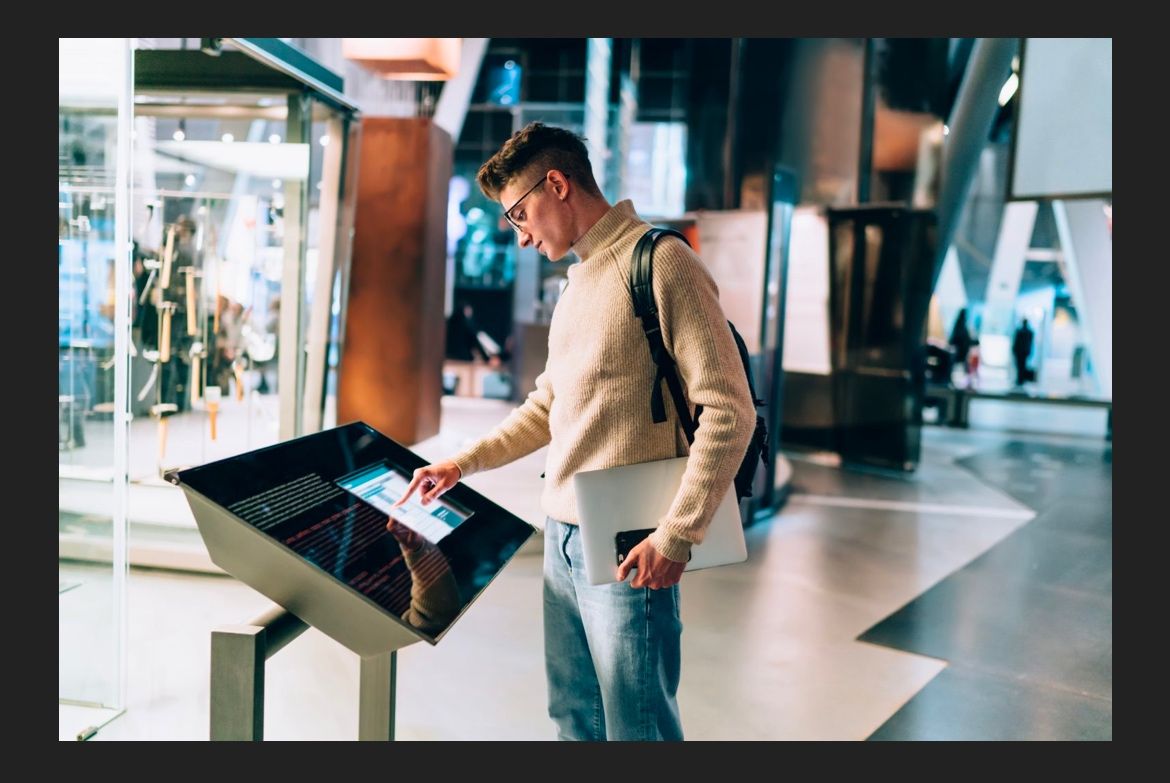
For years, digital transformation of physical spaces has focused on adding more screens, apps, and interfaces. But in reality, complexity doesn’t disappear when you add more information — it increases.
What people actually need in complex environments is not more choices, but clear, relevant guidance in the right moment.
Personalization has long been standard online. We expect content, recommendations, and services to adapt to who we are and what we need. In physical spaces, however, most experiences are still designed for “everyone” — which often means no one in particular.
A first-time visitor at a hospital doesn’t need the same information as staff. A tourist in a city center looks for something very different than a local resident. Yet both are often met with the same signs, maps, and static information.
The future of smart spaces lies in adaptive environments — spaces that understand context: location, time, movement, and intent. Not through intrusive tracking, but through anonymized patterns and intelligent interpretation.
This is where the idea of an invisible Smart Layer becomes essential. Instead of asking people to adapt to technology, technology adapts to people — quietly guiding, suggesting, and clarifying.
The result is less friction, faster decisions, and better experiences. Not because spaces become more digital — but because they become more human.
Leave a Reply